

What Is Gigacasting? A New Agenda in Automotive Casting
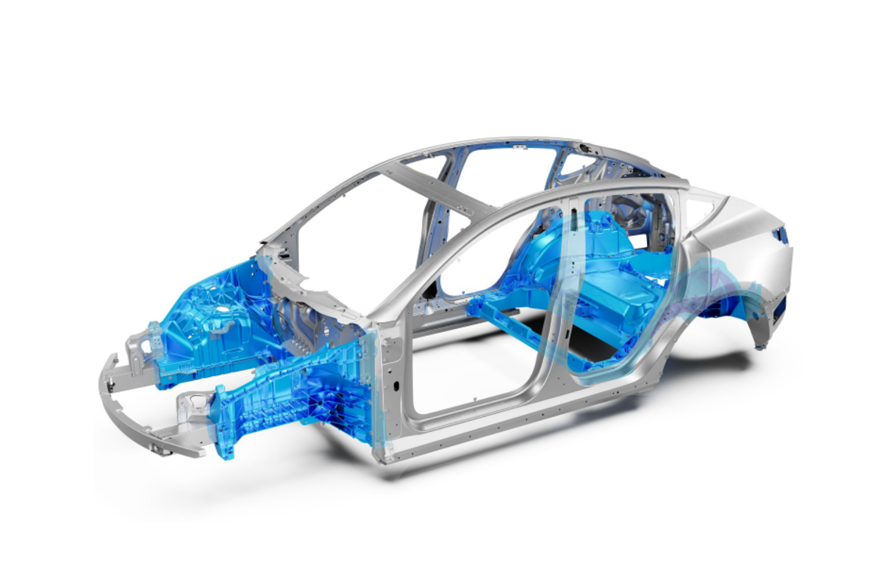
Gigacasting is the process of producing large, structural automotive components as a single aluminium casting, typically used in body-in-white architectures to reduce part count, weight and manufacturing complexity.
The goal of creating a circular, more sustainable economy is driving significant changes in automotive manufacturing methods. Innovative automotive casting technologies are being used to make lighter vehicles with fewer components and specifically tailored alloys.
The gigacasting process has been developed in response to the need to reduce component part count in order to deliver lighter, more cost-effective vehicles. As a result, larger structural body-in-white parts can be cast in one piece. Lightweighting of automotive components has long been a focus for manufacturers, driven by both regulatory requirements and sustainability agendas.
‘The need for increased sustainability in automotive manufacturing is driving casting innovation. Sand casting is playing a vital role in prototyping giga castings.’
EV Manufacturing Is Driving Gigacasting Production
Through significant part count reduction, gigacasting provides a route to lighter structural parts and the potential for more efficient vehicles. EV manufacturers are investing heavily in this method as they look to scale production and reduce complexity.
This growing interest in gigacasting is driven not only by lightweighting but also by economic advantages. By using single-piece casting to produce large structural components, manufacturers can eliminate multiple assembly steps – a shift that reduces both complexity and production costs.
These gigacasting benefits for electric vehicles support faster production cycles, improved energy efficiency and the wider adoption of zero-emission vehicles. It’s a practical solution that helps address both environmental targets and commercial pressures.
Single-Piece Gigacastings in Automotive Manufacturing
Gigacastings consolidate what was traditionally extruded, stamped or cast metal into a single front or rear-end body structure. This allows automotive manufacturers to produce large cast parts, or gigacastings, as a single net piece, reducing complexity in both design and assembly.
To illustrate the shift, the Tesla Model 3 required over 170 different pieces of sheet metal and more than 1,600 welds. In contrast, the Model Y replaces these with just a front and rear gigacasting, significantly reducing part count.
This transition to single-piece casting offers clear structural advantages in electric vehicles (EVs) — from simpler assembly and lower mass to potential gains in battery packaging and overall range. These gigacasting benefits for electric vehicles also support logistics efficiency, emissions reduction and greater flexibility in platform design.
How Is Gigacasting Impacting the Industry?
Gigacasting is reshaping how vehicles, and their supply chains, are designed, manufactured and delivered. By enabling large, structural components to be cast as a single aluminium piece, it reduces complexity across both engineering and production workflows.
As a result, vehicles are:
- Less complicated to assemble and integrate
- More cost-effective to manufacture at scale
- More sustainable through reduced material waste and increased recyclability
- Faster to produce, supporting accelerated time to market
This shift presents a major opportunity to rethink automotive manufacturing from the ground up. It’s a true paradigm shift, and while challenges remain due to the scale and precision required, the influence of gigacasting is already being felt across OEMs, suppliers and end users alike.
Often described as one of the most significant developments in body structure strategy in decades, gigacasting has been enabled by advances in equipment, process control and materials. It’s no longer a future concept; it’s fast becoming a mainstream automotive casting solution.
What Are the Benefits of Gigacasting?
The ability to cast large, single net structures is creating a fundamental shift in automotive manufacturing. By replacing multiple smaller parts with one integrated aluminium casting, gigacasting delivers a wide range of technical and strategic advantages for modern vehicle production.
Reduced Complexity and Production Time
Gigacasting reduces part count, eliminating the need for multiple castings, stampings and welds. This simplifies vehicle architecture and shortens the overall assembly timeline, leading to faster, more efficient automotive casting workflows and lower production costs.
Lighter Vehicle Architectures Through Aluminium
The extended use of aluminium in large structural castings supports sustainability through lightweighting. Not only does this help reduce overall vehicle mass, which can enhance EV range, but it also aligns with regulatory goals for reduced emissions and greater material efficiency.
Improved Use of Recycled Materials
Aluminium gigacastings increase the opportunity to use scrap and recycled alloys without compromising structural integrity. This supports a more circular approach to automotive component production and reduces dependency on virgin materials.
Architectural Integration and Supply Chain Efficiency
By committing to large, stable structural designs, manufacturers can drive deeper vertical integration and platform standardisation. While this limits flexibility for iterative design changes, it improves long-term efficiency and enables a more consistent manufacturing supply chain.
Where Does Sand Casting Fit in the Gigacasting Process?
Gigacasting is a relatively new technology in automotive manufacturing, requiring significant investment in tooling, equipment and process control. As a result, there’s a critical need to validate large structural designs before committing to full-scale production. This is where sand casting plays a pivotal role.
By enabling rapid, Make Like Production prototypes, sand casting provides a cost-effective way to replicate the geometry, material properties and alloy behaviour of final gigacastings. It allows manufacturers to evaluate structural integrity, performance, design intent and safety before moving into mass production.
In short, sand casting supports the prototyping of gigacastings by reducing risk, accelerating development and improving confidence in both product and process.
Read more: How does sand casting support gigacasting prototypes?
Read more: Will the automotive industry adopt gigacasting?
Gigacasting is Changing the Future of Automotive Manufacturing
Gigacasting is reshaping how automotive manufacturers approach design, production and platform strategy. With significant investment in the gigacasting process, the industry is moving towards faster, leaner and more integrated manufacturing methods.
Want to explore how sand casting prototypes are enabling this transition? Download our free eBook: Prototyping gigacastings with Sand Casting